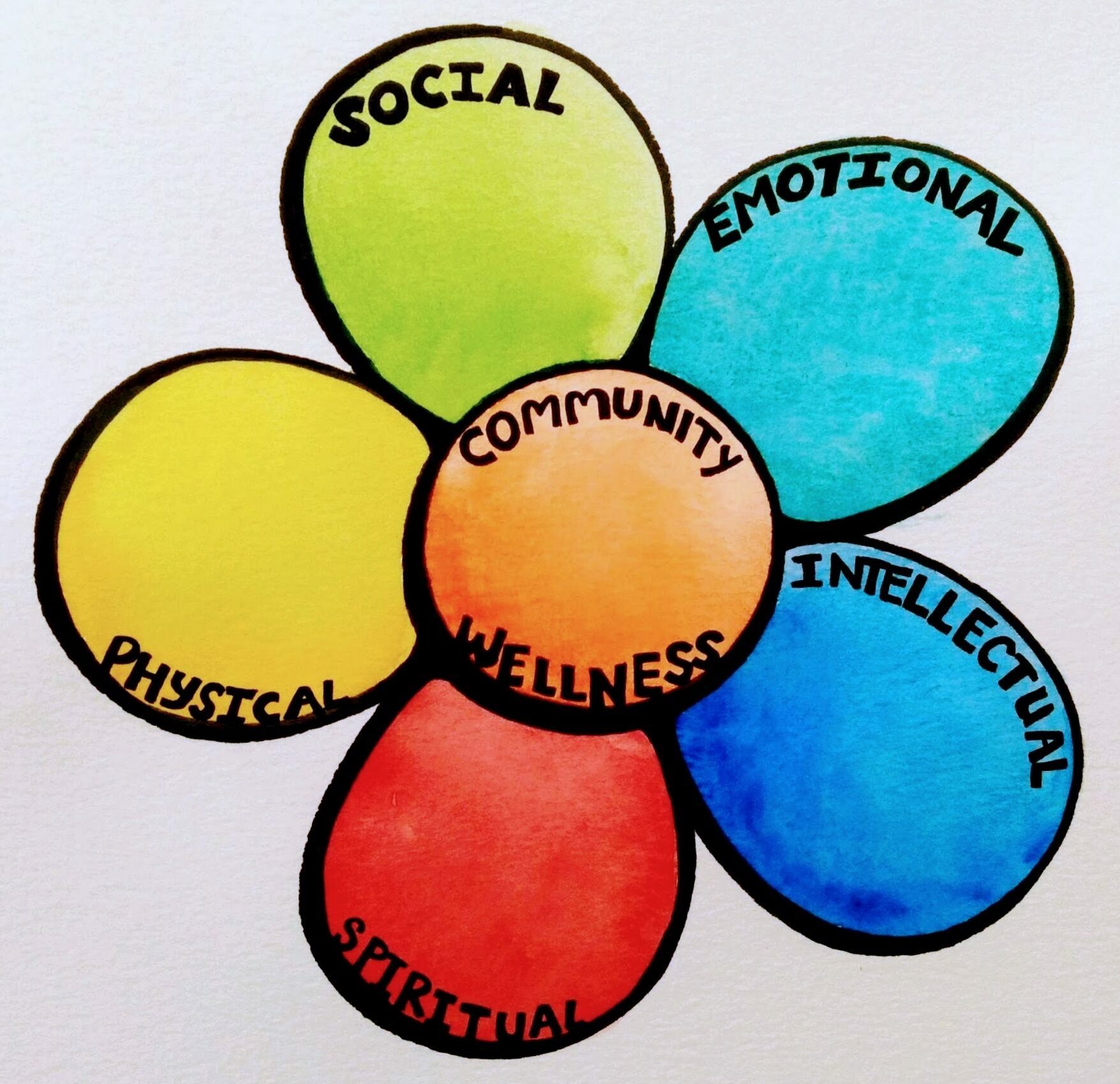
Develop foundational community wellness skills. Practice deep listening and linking skills in community and apply deep listening skills within ourselves to promote personal safety.
Can we use PFA to heal our outer and inner wounds?
PFA is about learning to listen in the right way, in a deep way, in a human way that can bring healing and resilience. This PFA course revolves around listening skills. It’s easy to practice and it’s easy to share. And, we explore many aspects of wellness that can support healing.
Can we use PFA to promote healing in communities?
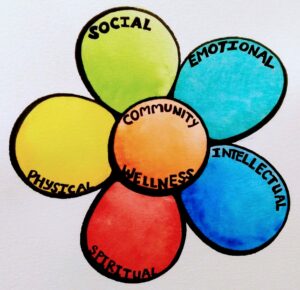
Our PFA approach is holistic and centered around community wellness. We recognize the importance of community in any healing and recovery process.
Why do we stress Community Wellness?
We humans are all social creatures, regardless of how our cultures define community. Each society has its own way to be in community. For example, one of the traumas of the COVID pandemic was that protocols forced people into isolation. For the elderly and high risk groups, this has meant very long periods of time without critically important social connections. And we can find many other examples across the world.
What will you gain in this course?
By the end of the course, you will be familiar with the components of an effective PFA practice, including deep listening, engaging the community or individual resilience and promoting holistic/systemic recovery. To put it simply, you will know what to do when others around you don’t.
Course Facilitators:
Dr. Patricia (Pat) Omidian holds PhD in Medical Anthropology from the University of California, Berkeley/ San Francisco and has worked in Afghanistan, Pakistan, Japan, Mexico, and Liberia developing psychosocial support, mental health and community wellness programs. She has conducted trainings in PFA, gender awareness, psychosocial support and self care for communities and in universities in an additional 12 countries.
Dr. Banu İbaoğlu Vaughn, PhD, LPC is a psychologist and seasoned psychotherapist specializing in dialogical and community-based interventions alongside her clinical practice, with a focus on Consciousness and Society. Her professional experience spans multiple cultural contexts, including extensive disaster response in Turkey’s earthquake-affected regions She brings a unique perspective to PFA through her commitment to dialogical presence, aiming to co-create supportive, empowering spaces for individuals and communities to process and reconnect to their resources.
Join us for a 5 Session online course (17 hours instruction time)
The Course begins on March 2, 2027 (11 AM ET, )
Enrollment limited!
FAQ:
Q: What is Psychological First Aid (PFA)?
- PFA is a humane, supportive response to someone who is suffering and may need support. It is not therapy, counseling, or a medical intervention. Its primary goal is to stabilize, reduce acute distress, and help individuals access their own resilience and community resources. It operates at the base of the “Mental Health Pyramid,” focusing on community and self-care rather than specialized clinical services.
Q: How is PFA different from therapy?
- Therapy is a contractual relationship where a professional analyzes, diagnoses, and works to “fix” or heal a condition over time. It often involves exploring the past and identifying patterns.
- PFA is a human-to-human encounter in the present moment. The goal is not to fix, analyze, or give advice, but to “be with” the person, witness their experience, and help them process what is happening now.
Q: Is PFA the same as therapy or counseling?
- No. PFA is distinct from formal psychotherapy or counseling.
- Therapy/Counseling: Is about long-term healing, processing trauma, and treating mental health disorders, usually conducted by licensed professionals.
- PFA: Focuses on immediate stabilization, emotional containment, and practical support. It is a “basic human skill” that anyone can learn, regardless of professional background.
- Note: Our approach integrates “Focusing,” a somatic practice that differs from traditional “talking therapy” by encouraging the person to listen to their own internal felt sense.
Q: Is PFA only for major disasters like war or earthquakes?
- While PFA originated in large-scale crisis contexts, it is applicable to any situation of distress. It can be used for:
- Major disasters (war, natural disasters, pandemics)
- Everyday life situations (family conflicts, personal stress, grief)
- Professional burnout or “overthinking” scenarios
- etc.
Q: How does PFA differ from “Critical Incident Debriefing”?
- PFA replaced Critical Incident Debriefing (CID) because research showed that forcing people to recount traumatic details immediately could sometimes cause harm. PFA prioritizes listening and stabilization without forcing the person to relive the trauma. It respects the individual’s pace and agency.
About the PFA course — Eligibility & Certification
Q: Who can provide PFA?
- Anyone. You do not need to be a psychologist, doctor, or mental health professional. PFA is designed to be a community-based skill. However, proper training ensures you know how to listen effectively and when to refer someone to specialized care.
Q: Do I need a psychology background to take the course?
- No. While many participants are psychologists or students, the course is for anyone who wants to be an “effective human” in their community.
Q: Is there a certificate provided?
- Yes, certifications are provided to those who attend the online classes and complete the required coursework.
Q: Can I do PFA without a certificate?
- Yes. PFA is a set of human skills (listening, presence, empathy) that anyone can practice. The course provides a framework and certification for those who want formal recognition, but the core practice is accessible to everyone.
Q: How do I get certified?
- Complete all 5 classes, participate in the connection rooms, submit homework/reflections on the Ruzuku platform, and engage with the course materials. The certificate is awarded upon completion of these requirements.
Q: Why is “Focusing” mentioned sometimes?
- In PFA, practitioners support others by listening and being present, all while supporting themselves.
- In a nutshell, Focusing is turning inward to attend to something emerging, finding words that fit, and checking; this allows change to happen and helps life move forward.
- PFA can be viewed as a stepping stone into Focusing, as both share the same fundamental approach; more Focusing is taught in courses after PFA in the CWF (Community Wellness Focusing) program.
Upcoming PFA course Schedule, Dates & Format
Q: What are the details for the upcoming course?
- Dates: The course runs from March 2 to March 30, 2027 with five weekly classes held on Tuesdays
- Time: 2.5 hours classes on Zoom
- from 11 AM to 1:30 PM New York Time
- Format: The training is entirely online
- Zoom for the classes
- and participants gain access to a dedicated platform (Ruzuku) for community-based activities, reading assignments, and connecting with other students.
Q: Is that all?
- No, there’s more!
- Each week an optional 1.5 hour practice group is proposed, you are invited to join if you can. [Day+time still in discussion]
Registration & Pricing
Q: Is there special pricing available?
- Yes, We use a country-based sliding scale to make our programs accessible to participants around the world. Contact us to learn the course fee for your country. If that fee is still beyond your means, we also offer a limited number of scholarships. Please reach out—we are happy to work with you to make participation possible.
Q: How do I register?
- Registration links vary by region:
Q: Who are the organizers?
- The course is a collaboration between Focusing Initiatives International (FII) and PsychoSocial Support, featuring a diverse team of facilitators from Italy, France, Turkey, Pakistan, and the USA.
- For more information on our organizations, visit: